End of Life Binder Checklist
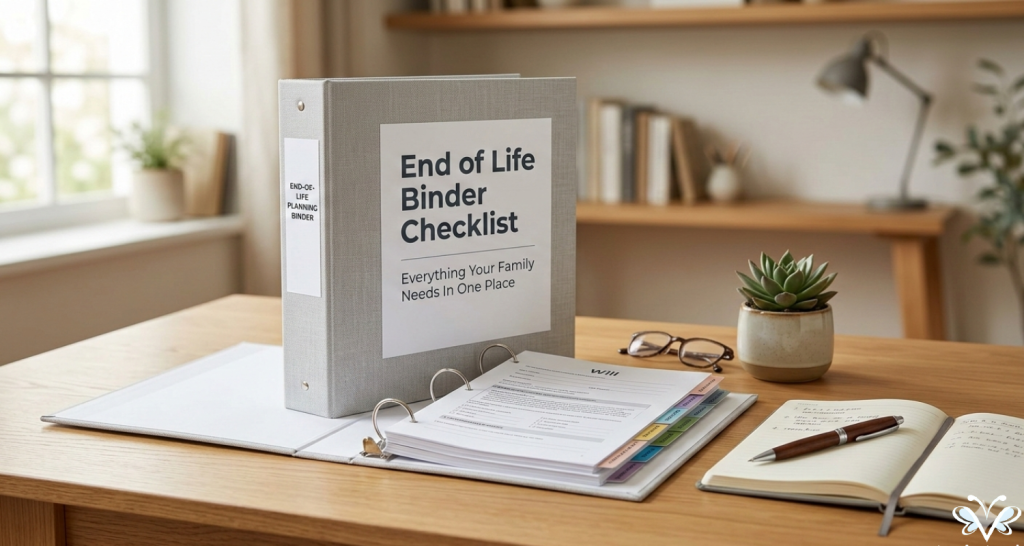
An end of life binder checklist organizes essential documents, financial accounts, legal records, and family medical history in one secure place so loved ones can access critical information quickly during emergencies or after a death. It reduces confusion, prevents delays, and helps families manage difficult moments with clarity.
Planning for the end of life isn’t about expecting the worst. It’s about making life easier for the people you love when they may already be dealing with grief, stress, or uncertainty.
Many families discover too late how difficult it is to locate important information after someone passes away. They search through drawers, email accounts, filing cabinets, and online portals trying to piece together the details of a loved one’s life. In those moments, even simple tasks can feel overwhelming.
An organized end of life binder checklist helps prevent that chaos. It creates one central place where critical documents, personal instructions, and family medical history are stored so loved ones know exactly where to turn when information is needed most.
In this guide, you’ll learn:
- What an end of life binder is
- Why family medical history should be included
- The complete end of life binder checklist
- How to organize estate documents properly
- Common mistakes families make
- How often you should update your binder

What Is an End of Life Binder?
An end of life binder—sometimes called a legacy planning binder, estate planning binder, or estate document organizer—is a structured system for storing important personal, financial, legal, and medical information.
Think of it as a roadmap for the people who may one day need to manage your affairs.
Legal documents like wills and trusts are essential, but they rarely contain all the practical details families need. For example, a will might name beneficiaries, but it doesn’t explain where accounts are located, what medications someone was taking, or how to contact their financial advisor.
That’s where a binder becomes incredibly valuable.
A well-organized end of life binder usually includes:
- Personal identification documents
- Legal paperwork
- Financial account information
- Insurance policies
- Property and asset records
- Digital account instructions
- Funeral preferences
- Family medical history
- Important contacts
Having this information in one place saves families from hours—or even weeks—of searching during an already emotional time.
Why Family Medical History Should Be Included in an End of Life Binder
When people think about estate planning, financial documents usually come to mind first. But family medical history can be just as important.
Medical history provides valuable insight for surviving family members and their healthcare providers. Many conditions have genetic components, meaning a family’s medical background can influence preventative care decisions.
For example, if heart disease, diabetes, or certain cancers appear frequently in a family tree, doctors may recommend earlier screenings or lifestyle adjustments.
Documenting family medical history also helps loved ones answer medical questions if they ever need to make healthcare decisions for you.
Without this information written down somewhere, details can easily be forgotten or lost over time.
Including family medical history in your binder preserves knowledge that could benefit future generations.
The Complete End of Life Binder Checklist
Creating a binder becomes much easier when information is organized into clear sections. Below is a practical checklist many families use when building their binder.
1. Personal Identification Documents
These documents are often required quickly when handling legal or financial matters.
Include copies or location details for:
- Birth certificate
- Social Security card
- Driver’s license
- Passport
- Marriage certificate
- Divorce documents
- Military service records
2. Legal Documents
Legal paperwork determines how your healthcare decisions and assets should be managed.
Your binder should reference:
- Last will and testament
- Living trust
- Durable power of attorney
- Healthcare power of attorney
- Living will or advance directive
- Guardianship designations (if applicable)
It’s also helpful to include your attorney’s contact information and where original documents are stored.
3. Financial Accounts
Many families struggle to locate financial accounts after a death. Listing them in your binder simplifies the process significantly.
Include:
- Checking accounts
- Savings accounts
- Retirement accounts (401k, IRA)
- Investment accounts
- Pension plans
- Credit cards
- Loans and mortgages
For security reasons, it’s better to provide instructions for accessing password managers rather than writing passwords directly in the binder.
4. Insurance Policies
Insurance benefits are often overlooked because family members may not even know policies exist.
Your binder should list:
- Life insurance policies
- Health insurance plans
- Long-term care insurance
- Homeowners insurance
- Auto insurance
Include policy numbers, provider names, and contact details.
5. Property and Asset Inventory
This section helps loved ones understand what assets exist and where they are located.
Include records for:
- Real estate
- Vehicles
- Safe deposit boxes
- Valuable jewelry
- Collectibles
- Business ownership interests
This information ensures important assets aren’t forgotten or overlooked.
6. Funeral Planning Checklist
Pre-planning funeral wishes can relieve families from making difficult decisions during grief.
Consider documenting:
- Burial or cremation preferences
- Funeral home preferences
- Service location
- Music or readings
- Obituary details
- Clothing or personal requests
These details provide guidance when emotions are high.
7. Medical Wishes and Family Medical History
One of the most valuable sections in your binder is your medical information.
Include:
- Do Not Resuscitate (DNR) orders
- Organ donation preferences
- Hospice care wishes
- Current medical conditions
- Medication lists
- Past surgeries
You should also record family medical history, including inherited conditions such as heart disease, cancer, diabetes, or neurological disorders.
This information can help doctors provide better care for surviving relatives.
8. Digital Assets
Today, many financial and personal records exist online. Without instructions, family members may struggle to access them.
Include a list of:
- Email accounts
- Social media profiles
- Online banking accounts
- Cloud storage services
- Subscription services
- Cryptocurrency wallets
Provide instructions for accessing password storage tools if needed.
9. Important Contacts
Your binder should include a simple list of people who may need to be contacted.
This might include:
- Your attorney
- Financial advisor
- Insurance agent
- Executor of your estate
- Employer
- Close family members
- Religious or spiritual leaders
Having these contacts readily available prevents unnecessary delays.
How to Organize Estate Documents Properly
Gathering information is only half the process. Organization matters just as much.
Many people choose a clearly labeled three-ring binder with section dividers for different categories. Original legal documents should be stored in a secure place such as a fireproof safe or safe deposit box.
Just as important: make sure someone you trust knows where the binder is located.
Even the most organized system won’t help if no one knows it exists.
It’s also wise to review your binder once a year and after major life events such as:
- Marriage
- Divorce
- Birth of a child
- Buying property
- Major financial changes
Regular updates ensure information stays accurate.
Common End of Life Planning Mistakes Families Make
Even people who try to prepare sometimes overlook important details.
Some of the most common mistakes include:
- Not updating documents after major life changes
- Ignoring digital accounts
- Failing to document family medical history
- Not telling an executor where documents are stored
- Assuming family members already know your wishes
Clear documentation prevents misunderstandings and reduces stress during an already emotional time.
When Should You Create an End of Life Binder Checklist?
Many people assume end-of-life planning is something to consider later in life. In reality, it’s helpful at any age.
Unexpected medical emergencies or accidents can happen to anyone. Having information organized early means your family will never be left scrambling during a crisis.
Starting now also allows you to build your binder gradually instead of trying to gather everything at once.
Frequently Asked Questions
What should an End of Life Binder Checklist include?
An end of life binder should include legal documents, financial account information, insurance policies, property records, digital assets, final wishes, important contacts, and family medical history. These elements give loved ones the information they need to manage affairs quickly and responsibly.
Is an end of life binder legally required?
No, an end of life binder is not legally required. However, it makes estate administration much easier. Legal documents like wills and powers of attorney still carry legal authority, but a binder organizes supporting details families often struggle to locate.
How often should an end of life binder be updated?
Most experts recommend reviewing your binder at least once per year or after major life events such as marriage, divorce, relocation, or financial changes. Updating family medical history is also important when new diagnoses appear in the family.
Where should an end of life binder be stored?
An End of Life Binder Checklist should be stored in a safe but accessible place, such as a fireproof home safe. Your executor or trusted family member should know where the binder is located and how to access it.
Conclusion
An organized End of Life Binder Checklist gives families something invaluable during difficult times: clarity.
By gathering legal documents, financial information, funeral preferences, digital accounts, and family medical history in one place, you eliminate the uncertainty that many families experience after a loss.
Preparation doesn’t mean expecting the worst. It means protecting the people who matter most.
Taking the time to organize your information today can spare your loved ones from confusion tomorrow—and give everyone a little more peace of mind.
Internal Resources
If you’re just starting End of Life Binder Checklist, I recommend reading:
- “How to Create a Family Emergency Binder”
- “End-of-Life Binder Checklist: What to Include”
- “VitalBinder™ Products“
Author
Laura Holeyfeld — Founder of VitalBinder
After personally navigating medical chaos during a family health crisis, Laura created VitalBinder to ensure families never face preventable confusion during emergencies. Her work focuses on preparedness, documentation systems, and reducing stress through organization.